As the "brain" of modern electronic systems, digital chips are the cornerstone of information technology. They process binary data and perform operations, storage, and control functions through logic gate circuits, driving the efficient operation of devices ranging from smartphones to supercomputers. Digital chips continue to break through with advanced manufacturing processes, achieving leaps in performance and energy efficiency. The rise of heterogeneous computing architectures enables collaborative work among modules such as CPUs, GPUs, and NPUs, demonstrating powerful computing capabilities in scenarios like artificial intelligence and image processing. Low-power designs combined with dynamic voltage regulation technology significantly extend the battery life of mobile devices. Their applications have penetrated every technological frontier.
- Digital Chips
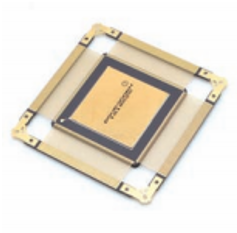
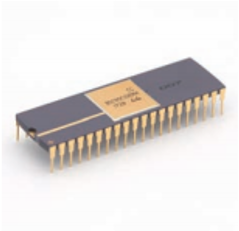
General-Purpose Processor Chips
Function
Executes general-purpose computing tasks and supports complex instruction sets.
Type
CPU (Central Processing Unit) Representative products: Intel Core i9, AMD Ryzen 9
Features
Multi-core architecture, high-speed cache, supports multitasking.
Applications
Desktops, servers, workstations, smartphones, tablets.
MPU (Microprocessor) Representative products
ARM Cortex-A78, Apple M3
Features
Low-power design, requires external memory.
Microcontrollers (MCU)
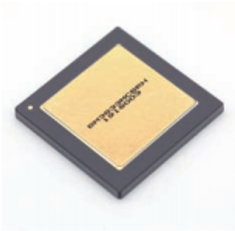
Function
Integrates CPU, memory, and peripherals to independently complete control tasks.
Representative products
STM32 series (ARM Cortex-M core), Arduino chips.
Features
Real-time response, low power consumption, rich on-chip resources (e.g., ADC, PWM).
Applications
Smart home (thermostats), industrial equipment (motor control), wearable devices (heart rate monitoring).
Digital Signal Processors (DSP)
Function
High-speed processing of digital signals (e.g., audio, video, sensor data).
Representative products
TI TMS320 series, ADI Blackfin.
Features
Dedicated multiply-accumulate units (MAC), pipeline architecture.
Applications
Audio codecs (Bluetooth headphones), communication base stations (signal modulation), drones (attitude control).
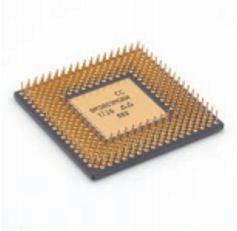
Application-Specific Integrated Circuits (ASIC)
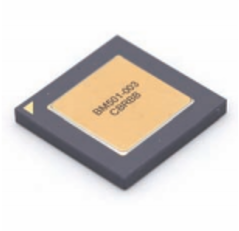
Function
Chips customized for specific functions, not programmable.
Representative products
Mining chips (Bitcoin mining), image sensors (CMOS chips).
Features
High performance, low power consumption, high cost (requires custom design).
Applications
Consumer electronics (mobile baseband chips), automotive electronics (ESP controllers).
Programmable Logic Devices (PLD)
Function
Implements arbitrary digital logic through programming.
Type
CPLD (Complex Programmable Logic Device) FPGA (Field-Programmable Gate Array)
Features
Parallel processing, reconfigurable, low latency.
Applications
5G base stations (protocol processing), AI acceleration (inference computing), aerospace equipment (radiation-resistant design).
CPLD (Complex Programmable Logic Device) Representative products
Lattice MachXO3
Features
Fixed logic blocks, low cost, suitable for small-scale logic.
Applications
Electronic toys (simple control), instruments (interface expansion).
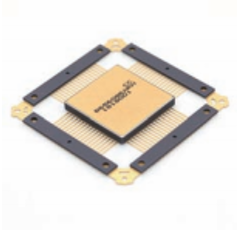
- AI Chips
Product Introduction
| Name | Specifications |
| Function | Accelerates AI algorithms (e.g., deep learning, machine learning). |
| Type | GPU (Graphics Processing Unit) Representative products: NVIDIA RTX 4090, AMD Radeon RX 7900 |
| Features | Thousands of stream processors, strong floating-point computing capability. |
| Applications | AI training (large models), autonomous driving (visual processing). |
| TPU (Tensor Processing Unit) Representative products | Google TPU v4 |
| Features | Optimized for matrix operations, low-precision acceleration. |
| Applications | Cloud inference (voice recognition), edge computing (smart cameras). |
| NPU (Neural Processing Unit) Representative products | Cambricon MLU370, Horizon Journey 5 |
| Features | Dedicated neural network instruction set, low power consumption. |
| Applications | Mobile AI (photo optimization), smart speakers (voice interaction). |